Showing posts with label God's Person. Show all posts

Saturday, April 25, 2009

How to Truly Study Nature


To be so occupied in the investigation of the secrets of nature, as never to turn the eyes to its Author, is a most perverted study; and to enjoy everything in nature without acknowledging the Author of the benefit, is the basest ingratitude.

---John Calvin, Commentary on Genesis


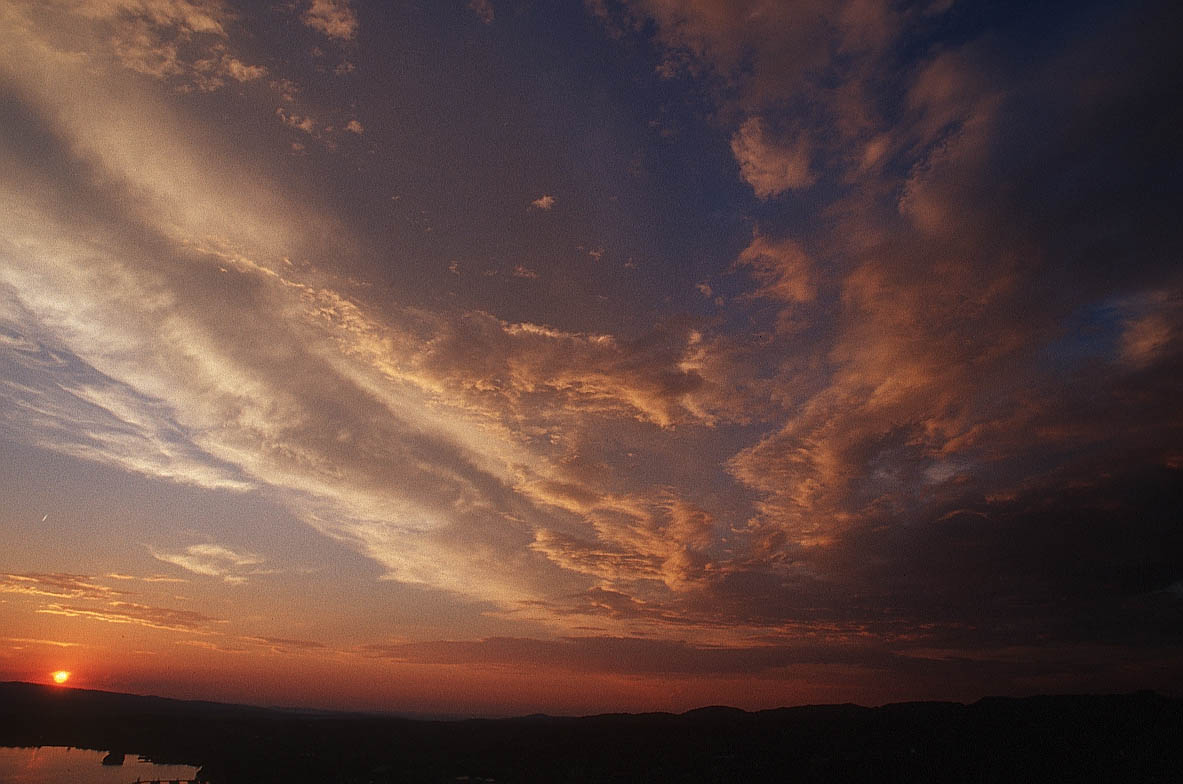
The heavens declare the glory of God,
and the sky above proclaims his handiwork.
Day to day pours out speech,
and night to night reveals knowledge.
There is no speech, nor are there words,
whose voice is not heard.
Their measuring line goes out through all the earth,
and their words to the end of the world.
In them he has set a tent for the sun,
which comes out like a bridegroom leaving his chamber,
and, like a strong man, runs its course with joy.
Its rising is from the end of the heavens,
and its circuit to the end of them,
and there is nothing hidden from its heat. (Psalms 19:1-6)

Friday, October 24, 2008

Groans of the Spirit


In Romans 8:26-27, we read the following from Paul,


Likewise the Spirit helps us in our weakness. For we do not know what to pray for as we ought, but the Spirit himself intercedes for us with groanings too deep for words. And he who searches hearts knows what is the mind of the Spirit, because the Spirit intercedes for the saints according to the will of God.


Now listen to words of Stuart Olyott concerning these two verses:


For years I have been mystified by all those hymns that start with 'O'. These are seventy-six of them in the latest edition of Christian Hymns. Why do some many hymns begin with 'O', as well as so many individual verses and choruses? It is because there is something going on inside us which cannot be expressed. It comes to the surface as a groan. But it is not our groan, says the apostle; it is the groan of the Spirit. . . . Here we are in this world, with Spirit-given aches and groans inside us. We long for the redemption of our bodies, the resurrection, and the new heavens and earth. We long to be out of this world and away from its filth. We long to be where there is perfect purity and holiness, and therefore perfect happiness. The very fact that we have these groans inside us is God's proof to us that we will have the destination that we want. This inward Spirit-voices speech is a further guarantee that the present order will not go on forever and that, despite our present sufferings, we are on our way to glory

Do you understand what Olyott is talking about? Do you see it in these hymns of saints written by saints of the past. Does the Spirit intercede for you with these groans which are too deep for human words spoken in prayer. All true believers experience this, but perhaps they experience it more on those occasion when they have come to the end of their strength. As these verses show, it is in our weakness that the Spirit works these deep groanings within us. And as they also teach, these groanings are according to the perfect will of God. God knows what is for our absolute best and good, which is what Paul goes on to show in the following verses in Romans 8, and He sends His Spirit to intercede within us prayers that are according to His will. The next time you see a hymn which starts or includes the word 'O' think of these verses.

Wednesday, July 30, 2008

Thoughts of Heaven


In Ligon Duncan's Book Fear Not - Death and the Afterlife from a Christian Perspective, he has several good quotes about the Christian and Heaven. Here are a few:

As a believer's life is very different from an unbeliever's life, so also a believer's death is very different from an unbeliever's death. The unbeliever prefers Heaven over Hell; the believer prefers Heaven over this earth. The unbeliever prefers Heaven only over Hell because he cannot imagine anything more blessed than this life. The believer prefers Heaven over earth, because the believer cannot imagine anything more blessed than life with God. - Unknown Source

There is a great deal of difference between the desires of Heaven in a sanctified man and in an unsanctified one. The believer prizes Heaven above earth, and had rather be with God than here, though death stands in the way and may possibly have harder thoughts from him. But for the ungodly, there is nothing that seems more desirable than this world, and therefore he only chooses Heaven over Hell, but not over earth; and therefore shall not have it upon such a choice - Richard Baxter

Baxter is saying that nobody in his right mind would choose Hell. If they are asked, then they'll always say, "Oh, yes, heaven over hell, please!" In contrast, the mark of a Christian approaching death is a desire for heaven over earth, heaven over this life. The Christian desires Jesus over the things that are most precious in this world, and not simply an existence that is more attractive than the torments of an eternity in Hell. - Ligon Duncan

All men must die, but as men's lives are very different, so their account in death is, also. To an ungodly man, death is loss, the greatest loss; but to a believer, it is gain, the greatest gain. - Thomas Boston

I am so in love with His love that if He(Christ) were not in Heaven, I would not want to go there. - Samuel Rutherford


The same thought from different men. Do you treasure Christ like this?

Wednesday, July 23, 2008

Don't Be Afraid - Be Very Afraid!


In Mark 4:35-41, we read the story of how Jesus calms the wind and sea during a trip across the Sea of Galilee after a day of teaching. Here it is in the NASB:

On that day, when evening came, He said to them, “Let us go over to the other side.” Leaving the crowd, they took Him along with them in the boat, just as He was; and other boats were with Him. And there arose a fierce gale of wind, and the waves were breaking over the boat so much that the boat was already filling up. Jesus Himself was in the stern, asleep on the cushion; and they woke Him and said to Him, “Teacher, do You not care that we are perishing?” And He got up and rebuked the wind and said to the sea, “Hush, be still.” And the wind died down and it became perfectly calm. And He said to them, “Why are you afraid? How is it that you have no faith?” They became very much afraid and said to one another, “Who then is this, that even the wind and the sea obey Him?”

A few things to notice.
  1. There were other boats around him, not just the one he and the disciples were in. So there were more witnesses to this event that we don't normally hear about when this story is told.
  2. Also notice Jesus' comments to the disciples after He calms the wind and the sea, "Why are you afraid?" Jesus tells the disciples that they should not be fearful, but have faith that He has everything under control.
  3. Notice the response of the disciples after this comment by Jesus to them, "They became very much afraid." The words of Jesus did not remove their fear, but his actions and words made them more afraid. Why? Because they had never seen a man who was able to command the wind and the sea. This was more to be feared than the storm.
This theme is throughout the Bible. Proverbs contains 14 verses dealing with the fear of the Lord such as Proverbs 9:10, "The fear of the LORD is the beginning of wisdom, And the knowledge of the Holy One is understanding." And Luke 12:5 tells us this, "But I will warn you whom to fear: fear the One who, after He has killed, has authority to cast into hell; yes, I tell you, fear Him!" The fear of God is a healthy thing. One commentator puts it like this:

The fear of God may well include a recognition of the futility of human opposition to the divine, especially for those who are God's enemies, but for those who follow God, fear grows from the respect and honour of which God is worthy as God.

We all should come to the point of seeing the futility of opposing our Sovereign Creator God who sustains and directs all things by the power of His word. For the unbeliever this should be one of terror and dread once they catch a vision of the reality of their position (just read some Puritan sermons such as Jonathan Edwards). However, for the believer, this fear becomes one of reverence, awe, respect, honor and worship to the one who has saved us from His wrath through the substitutionary sacrifice of Christ. He is worthy, He is Holy, and He alone should be feared by the Christian. Let us listen once again to the words of our Lord to the apostle John on the Island of Patmos:

When I saw Him, I fell at His feet like a dead man. And He placed His right hand on me, saying, “Do not be afraid; I am the first and the last, and the living One; and I was dead, and behold, I am alive forevermore, and I have the keys of death and of Hades. (Revelation 1:17-18)

For the Christian, to fear Christ is everlasting joy and hope beyond our wildest imagination. So, do not be afraid - be very afraid.